
• Skip to primary navigation
  • Skip to content
  • Skip to primary sidebar
  • Skip to footer

Arthritis WA HomepageArthritis WA

Arthritis Care, Osteoarthritis, About arthritis | Arthritis Foundation of WA

  • My Profile
  • Cart
  • Donate
  • Home
  • News
    • Latest News
    • Health and Lifestyle
    • Research
    • Spotlight
    • Youth
  • About Us
    • Staff
    • Board
    • Constitution
    • Annual Reports
  • Arthritis
    • Osteoarthritis
    • Fibromyalgia
    • Gout
    • Rheumatoid Arthritis
    • Ross River Virus & Barmah Forest Virus
    • Polymyalgia Rheumatica
    • Scleroderma
    • Reactive Arthritis
    • Lupus
    • Winter and Arthritis
    • Psoriatic Arthritis
    • Spondyloarthritis
    • Sjogren’s Syndrome
  • Osteoporosis
    • Diagnosis
    • Prevention
    • Risk Factors
    • Treatments
  • Services
    • Arthritis Today
    • Children with Arthritis
    • Community Speakers
    • Exercise
    • Useful Links
    • Self Management Courses
    • Support Groups
    • Telephone Services
  • What Can I Do?
    • Donate
    • Share with Friends & Family
    • Leave a Bequest
    • Volunteer
    • Fundraising
  • Events
  • Resources
    • Shop
  • Research
    • Clinical Academics in Western Australia
    • Current research activities
    • Would you like to participate in research?
  • Contact Us

Real Arthritis Stories

Born to Run (and how I overcame the hurdles along the way!)

Date: 14/12/2018

I have always been a very active person and have been a competitive runner since the age of nine, competing at a national level as a teenager in the United Kingdom.

However, in early 2010, I started experiencing a lot of pain in my right hip. The pain gradually increased to the point where I could not run and it would wake me up during the night. Suddenly, not being able to do the things that I loved and that made me who I am, made me feel very lost.

Over the next few years, I worked with a physiotherapist and tried a range of different treatments to relieve the pain. Suffering from persistent pain had a huge impact on my life. After being in constant pain for two years, I saw an orthopaedic surgeon for a second opinion and eventually had surgery. I had to wait a few months for the surgery and wanted to be in the best shape possible.

Whilst it had taken a long time to come to terms with my limitations, I also knew that for the benefit of my health I needed to remain active, so I continued to swim and I began cycling.

The surgery was a big procedure with a long recovery. Afterwards, I was very strict with my rehabilitation, which included walking and strength exercises in the pool, as well as strength exercises in the gym. It was about four months before I could ride my bike. Rehab was tough and I often found it hard to motivate myself but I knew I had to if I wanted to recover well.

A year after the first surgery I started having the same pain in the left hip. I consulted my physio and after no improvement, I consulted my surgeon. The x-rays and scans showed my left hip had the same problem. My surgeon told me to consider if I wanted the surgery, as there was a possibility that I might not ever be able to run again. These words were devastating to hear, as running was a big part of my life.

I spent some time thinking about it as I felt I had only just recovered from the first surgery, and I was not sure if I wanted to go through all of that again. I made the decision to proceed with surgery, as I knew the pain would only increase and the likelihood of living a more active lifestyle would diminish if I did not.

In February 2014, I had the second surgery and was better prepared this time, which made it easier in some ways. Again, the rehab was a long process and after two months, I began feeling worn down by it all.

My partner took me down to Busselton to watch the Half Ironman triathlon (1.9km swim, 90km bike ride and 21.1km run). Even though I was still on crutches, still in pain, and had a great deal of rehab ahead of me, I felt inspired and motivated while watching the event and told my partner that I wanted to compete in the race in 2016.

Setting that goal really kept me focussed during rehab. There were many times I did not feel like going to the pool or gym and sometimes felt down at how little I could do but one of the most important things to do in rehab is to be consistent. I knew that the consequences would mean I would not be able to run or lead an active lifestyle; and in the darker times, that is what kept me going.

It took a year of hard work but eventually, I could run. It started with very small runs interspersed between walking. It was very important to be consistent and to increase the time gradually in order for my body to adapt as it had been almost five years since I had run!

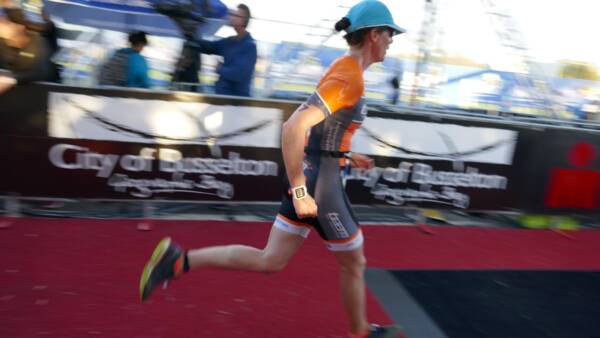
Finally, that day arrived; May 1st, 2016. Two years after I had set the goal to compete in the Busselton Half Ironman, I was standing on the beach at the start line. I was nervous but I also felt grateful to be there as it felt like a reward for all the effort I had put in during rehab. After the swim and ride, I began the run and smiled the whole way round. It was hard work, yes, but I felt so happy to be there, remembering standing on the sidelines only two years earlier, and I could not believe how far I had come.

After completing the Half Ironman, I decided to set my sights a little higher to a full Ironman. I discussed this with my physio and decided to use a coach to help guide me in the right direction, as this was way beyond anything I had ever done before. The training was a step up from the half ironman and was a huge commitment. I put so much of what I had learned during rehab into training; for example, consistency, resting well and listening to my body.

December 4th, 2016 I competed in the Ironman Western Australia. Not only did I finish, I ran the marathon without any pain in my hips (probably the only part of me that did not hurt!).

I am now pain-free and am able to run and live an active lifestyle after five long years, with many difficulties along the way. I am now very mindful of performing 2 to 3 strength sessions per week to keep my body strong. I was grateful to have had the support of my partner and friends throughout the whole process as having a strong support network made a huge difference.

Finally, I learned so much about goal setting. After my first surgery, I had one goal, ‘to run’. This made rehab much harder as that goal seemed so unobtainable. Therefore, after my second surgery,

I wrote 50 short, mid and long-term goals. Although the last goal was still ‘to run’, it was much more satisfying and motivating to be able to tick things off the list (however small) on the way to achieving my main goal.

by Lucy Loughman

Filed Under: Real Arthritis Stories

“Oh Mummy, you look as though you’ve been ironed…!”

Date: 14/12/2018

Abbey was born a new parents dream; she ticked all the boxes, was meeting her milestones, was happy, crawled and was walking by 12 months. By 20 months however, her early waking excitement seemed subdued and she would resort to a slow crawl until midday.

Mother Amanda and father Graham, both paediatric nurses, exchanged worried glances and pondered the possibility of illness, decided to see their doctor, who turned out to be away.

In his place, a locum deputised, a doctor who had recently finished a rheumatology rotation at Princess Margaret Hospital for Children in Perth and was full bottle on RA, arthritis, JIA. Such is the lotteries of life.

He examined Abbey’s swollen knees, took a history from the parents and suspected juvenile idiopathic arthritis (JIA). He said ‘…take Abbey immediately to the nearest hospital emergency department.’

Her parents, alarmed by his urgency, contacted a work colleague to discuss the best option for having Abbey reviewed through correct channels. She suggested ‘…if the diagnosis of JIA was correct – go and see the Paediatric Rheumatologist in his rooms as soon as possible’.

They did, and Abbey underwent a barrage of investigations including testing her eyes for any sign of uveitis, a condition dangerous to sight.

With their paediatric knowledge, Amanda and Graham feared the worst; the test results confirmed their fears. Abbey did indeed have juvenile idiopathic arthritis, her joints were inflamed, her eyes were at risk and loss of sight was a high possibility.

Little Abbey had no idea what a life sentence her newfound diagnosis had dealt her. Now 14, she injects Humira every two weeks, is on a multitude of oral medications to manage her pain, administers steroidal eye drops multiple times every day, yet still holds her smile today.

Despite being compliant with management regimes, her left eyesight has deteriorated, a cataract formed and with rising pressures in her eyes glaucoma was diagnosed. At 4 years of age awakening from her cataract operation with a new lens insitu, she exclaimed …“Oh Mummy, you look as though you’ve been ironed…!”

Heartbreakingly Abbey had not been seeing the world well for some time. Her joints are also affected, cartilage is fragile and bits have broken off requiring surgical removal. Her knees and ankles are swollen, hot and painful. Wrists and fingers ache when she writes. Hospital visits have been plentiful and active sport is off her agenda. Being born with pain, she knows not what life without pain is like…

If occasionally, you wonder why our passion for solving these problems, runs so high, surely Abbey’s story is but one. This is a lovely girl of 14 years, who lives with juvenile idiopathic arthritis, her eyesight is at constant risk and she survives each day by ingesting an amazing array of drugs in attempt maintain her joint health, mobility and vision.

Our ambition is to find a cure, and we will if we can anticipate your help too.

Filed Under: Real Arthritis Stories, Youth

Ehlers Danlos Syndrome: Diagnosis makes a difference

Date: 11/12/2018

Some of us are naturally more flexible than others, or hypermobile as the medical people describe it. For many, being hypermobile is not a big deal and may even offer advantages in certain sports and careers. For others, these stretchy tissues can cause serious ongoing health challenges which are painful, unpredictable and sometimes disabling.

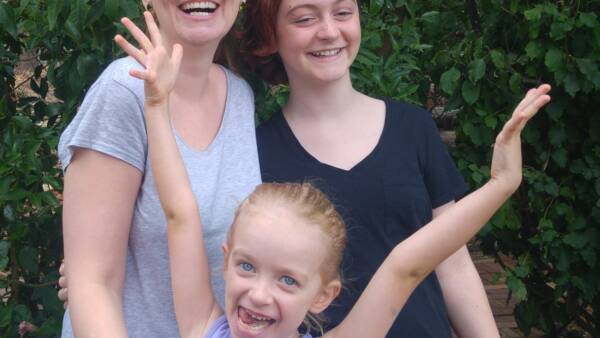
My younger daughter Cate hurts her joints very easily doing things other 6-year-olds take for granted. She’s dislocated her shoulder three times at rest. Her jaw is so loose that she struggles to speak clearly, and has been in speech therapy for years. Chewing a steak is out of the question!

My older daughter Lucy is fourteen and has spent the past year dealing with severe nerve pain triggered by a dislocation which tore her hip. She was sitting at the dinner table when it happened.

Lucy was bedridden for more than four traumatic months before learning how to function with persistent and often intense pain. She missed nearly two-thirds of school last year.

I’ve always been bendy myself and had my fair share of painful joints and other problems. However, towards the end of my last pregnancy, I suddenly couldn’t weight bear because my hips were dislocating with every step. I’ve had several surgeries, but the repairs didn’t last. The pain and restrictions persist nearly seven years later, and now many other joints have joined the party.

Despite years of unexplained symptoms and endless medical appointments, it wasn’t until Cate was nearly five that we were all diagnosed with the hypermobile type of Ehlers Danlos Syndrome (EDS).

EDS is the name given to a group of genetic or inherited disorders which affect collagen, a vital building block in the connective tissue or “glue” which holds our bodies together. Although EDS is increasingly recognized as causing musculoskeletal pain, collagen is the most abundant protein in the body, meaning there is almost no limit to the places where issues can arise.

Poor eyesight, dental crowding, soft and fragile skin, excessive bleeding, digestive system issues, and autonomic dysfunction are just some of the problems my daughters and I deal with every day.

Cate’s skin splits open easily, so a simple scratch will heal slowly and often leave a scar. In hot weather, if I stand up quickly I lose my vision, get very dizzy, and sometimes faint. To combat this, I am supposed to drink lots of water but I also have gastroparesis (stomach paralysis) and often can’t drink anything at all.

Many health professionals appear reluctant to formally diagnose EDS, perhaps because it is considered rare and has no cure. Since hypermobility occurs on a spectrum, it can also be difficult to distinguish a flexible but otherwise healthy person from someone with EDS or a related disorder.

For my family though, our EDS diagnosis was the first positive step towards us taking back some control over our lives. Not only do we finally have an answer for all the things that were going wrong, but we are also able to meet others in the community with the same condition, and to seek treatments which have the best chance of improving our quality of life.

We see occupational therapists, pain specialists, and have a phenomenal physiotherapy team to help us build strength using techniques appropriate for our hypermobile joints. Now we know about EDS we avoid certain activities, and my daughters are very fortunate to have a wonderful paediatric rheumatologist to coordinate their care. Because of our diagnosis, we’ve been able to access some sources of assistance to help a little with the significant financial strain on our family.

Although it’s considered rare, some experts believe EDS and related hypermobility disorders may be underdiagnosed. Symptoms can vary dramatically, even within the same family.

“Carrie’s story is all too familiar to me as a specialist clinician in this area of Medicine, but I suspect on reflection, colleagues will realize they too have patients with similar histories in whom the diagnosis has not been considered.” said Dr Alan Hakim, Consultant Rheumatologist and Clinical Lead of the Hypermobility Unit at London’s St John and St Elizabeth Hospital.

“The value to individuals and families of a diagnosis, and our then ability to adapt and better treat them should not be underestimated. The challenge internationally is to both help non-specialists recognize these conditions, and to develop more multi-disciplinary teams with resources to support people like Carrie and her family.”

For more information about hypermobility disorders and Ehlers Danlos Syndrome, visit the websites Hypermobility.org or www.ehlers-danlos.com

Filed Under: Real Arthritis Stories

Sabrina Hahn: Arthritis no match for Australia’s gardening expert

Date: 10/12/2018

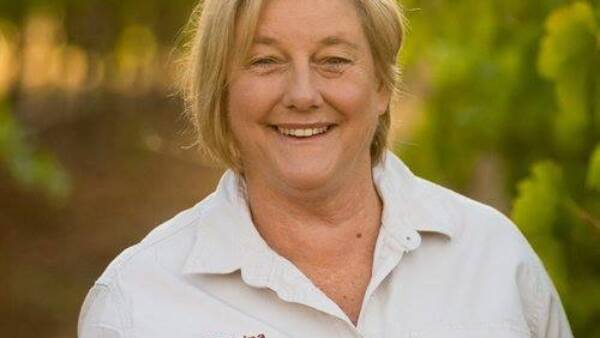
Sabrina Hahn is one of Australia’s most popular gardening experts, sharing her considerable horticultural expertise with her trademark optimistic enthusiasm and down-to-earth approach.

A qualified horticulturalist with a passion for creating sustainable environments, she has been ABC Radio’s gardening expert for over 25 years, sharing her stories and love for green spaces with the gardening community.

One of the earliest pioneers to promote sustainable gardening practices in the media, Sabrina has been guiding and inspiring gardeners to grow their own food through her weekly columns in The West Australian newspaper.

She is also a highly entertaining public speaker, MC, well-respected author and for the past decade, has worked extensively in remote Indigenous communities in the Kimberley, developing edible gardens so they can have greater access to healthy food.

At 61 years of age and still working 60 hours per week, not even arthritis can slow her down.

“I’ve had osteoarthritis for about 10 years. It is worse in my hands, particularly my right hand, in my knees and feet,” said Sabrina.

“For me, the arthritis has come about because of my occupation, but I don’t let it stop me from doing all the things I love. I just find other ways and means so I can still carry on this work and not come in at night in absolute agony,” she said.

“If I’ve had a big day of gardening, I will soak in a bath of lavender oil. Lavender is a really good anti-inflammatory plant and is great for easing the swelling.”

Sabrina also does Pilates twice a week and finds it to be an enormous help as it keeps her body moving without the weight-stress on joints.

“With arthritis, the pain can control you rather than you controlling the pain. So keeping all your joints moving is really important – but moving without stress,” she said.

“You have to understand the limitations of your body, you might not go on an 11km run but you must keep your body working. If you stop moving your body altogether, then all you do is focus on the pain.”

On days when her arthritis is very painful, Sabrina will take anti-inflammatory medication but she believes the key to living well is all about balance and managing stress. She believes eating a balanced diet of a broad range of foods is very important. And the fresher the food and the less processed the better.

“Once you start taking food and you homogenise and pasteurise it, put in vitamins and take out fat and all those kinds of things, you are losing the essence of the food.”

Having grown up in the country and remote areas, Sabrina never developed a palate for takeaway foods.

“Most gardeners are cooks because they grow their own produce. I have a veggie garden and lots of fruit trees and I will eat what is in the veggie patch, what is in season.” she said.

Looking after your garden can be more difficult if you have arthritis but Sabrina believes it does not mean you should give up something that you enjoy. Instead, she finds ingenious ways to modify tools and mechanisms that will make her gardening work easier.

“Because the arthritis in my hands is really bad, it means I can’t grip things properly so I bought some polystyrene foam from the surf shop. It comes in a tube with a split down the middle and then you just slip those onto your garden tools. They allow for a better grip and means my hands won’t be sore after working for a while.”
Sabrina uses rubber grip mats to help grip objects easily with her hands and a padded garden kneeler with handles to ease the pressure on her knees when she is kneeling in the garden.

“Also in terms of carting stuff around, I use a trolley and a wheel barrow as much as I possibly can as lifting and hanging on to things is a lot more difficult because of the arthritis in my hands.” She said.

Any final thoughts for our readers?

“Yes, don’t ever give up the things you love because you have physical changes in your body. It’s quite good that I have arthritis because then I have to stop,” she said.

“It is a matter of attitude and you have to focus on the positives,”

“So it is wonderful that when I stop, I actually sit down and just ‘be’ in the garden and enjoy what I have achieved. I think that is a really big positive.”

by Lily Lomma, Editor Arthritis Today magazine

Filed Under: Real Arthritis Stories

Juvenile Arthritis is a childhood missed

Date: 30/11/2018

Sixteen-year-old Macy Vaz has spent most of her life in crippling pain.

Diagnosed with Juvenile Arthritis in her left ankle and left knee when she was just two-years-old, the debilitating pain she has endured from such an early age has in many ways, forced her to miss her childhood.

“She has been put into a grown-up world at a very young age and has had to deal with what most people think is an old person’s disease,” Macy’s mother Karen said.

“I remember she woke up one morning and couldn’t walk so I took her to see the Doctor. They sent her to Princess Margaret Hospital to have blood tests but the tests came back inconclusive.”

After many frustrating medical appointments trying to find answers, Macy was eventually diagnosed six months later with Juvenile Arthritis.

“That was a very difficult time because I knew she was in pain but there was nothing I could do to help her. It was like…..What do I do now? Where do I go?”

Once diagnosed, Macy had to have regular injections and had to wear a cast at night. There were many times she was unable to walk and needed to be pushed in a pram. Slowly, her condition became a little more manageable but the high dosage meant over time she was left with no immune system.

A change in medication seemed to resolve the issue but it still wasn’t enough to prevent the challenges Macy had yet to face.

Her mother remembers during a trip to Melbourne, when Macy was just eleven-years-old, she was unable to walk when she came off the plane. A visit to the hospital soon informed them that her medications were no longer working, and the scan revealed she now had Avascular Necrosis.

Avascular Necrosis (AVN) also called osteonecrosis is a condition in which blood supply to the bone is disrupted and the bone dies. AVN usually affects large weight bearing joints such as the hips or knees but on occasion can affect the shoulders, ankles or wrists.

Karen started a diary to keep track of the numerous medical appointments and to also record how Macy was feeling each day, as the pain and physical limitations of living with Juvenile Arthritis was also affecting her mental health.

“She missed out in participating in playground activities as she was not able to run. She felt excluded by the other children because they didn’t understand why she couldn’t join in.”

And her condition became only more challenging during her teenage years.

“Arthritis has impacted our entire family – we can’t plan activities in advance because we don’t know how she will feel that day? We just have to take it day by day.”

Today, due to earlier diagnosis and more effective treatments, joint deformities in people with arthritis are less frequent and severe. This means arthritis is not easily visible and can often be misunderstood by younger children who may not understand why their classmate has to sit on the sideline during physical activities.

But soon there came a glimmer of hope when Macy began attending Camp Freedom, a camp specifically designed for children aged 7 – 17 years with Juvenile Arthritis.

“I love going to Camp Freedom – I look forward to going every year! It’s great to be with other children my age who are going through the same experience as me,” said Macy.

“I just wish it was held more than once a year!”

Arthritis & Osteoporosis WA (AOWA) run the 6-day camp which is sponsored by Lotterywest during the October school holidays. It provides the children an opportunity to learn about their condition in a safe and friendly environment. Children are encouraged to try new experiences in order to gain self-confidence, learn communication, cooperation and self-management.

“And the new JIA Support Group for Parents and Children held by AOWA has been very helpful as well. The Facebook Group Page has been a huge support for parents who need help and to also know they are not alone,” Karen said.

by Lily Lomma, Editor Arthritis Today magazine


You can help children like Macy create fun childhood memories…..

Consider making a donation to help us provide children living with arthritis, a chance to have fun and make life-long friends with other children who understand the challenges they are going through.

For many children, camp is the only opportunity in the year where they can truly be themselves in a non-judgmental environment.

Your donation will help us to cover the cost of a qualified Nurse to attend the camp, food and accommodation, transportation and equipment for group activities.

Please call us on 9388 2199 or donate online on our website here

Filed Under: Real Arthritis Stories, Youth

Primary Sidebar

  • Facebook
  • Twitter

Footer

  • Home
  • About Us
  • Services
  • Contact Us
  • My Profile
  • Privacy
  • Refund Policy

17 Lemnos Street
SHENTON PARK
Western Australia 6008

PH: 08 9388 2199
FAX: 08 9388 4488
COUNTRY CALLERS: 1800 011 041

  • Facebook
  • Twitter